
The programme was inspired by the Design Sprint methodology, combining collaborative workshops, rapid prototyping and user validation to move from an initial challenge to a testable product.
Introduction
The workshop focused on an existing digital product developed by
one of the participating companies, designed to help people
discover places, cultural heritage and experiences across
Sardinia.
The challenge was to explore how its digital experience could
better support discovery, create more engaging interactions with
the territory and balance guided experiences with the freedom to
explore.
Project Output
Over three workshop days, we moved from the initial challenge to
a shared product vision and a defined user flow through a series
of collaborative exercises.
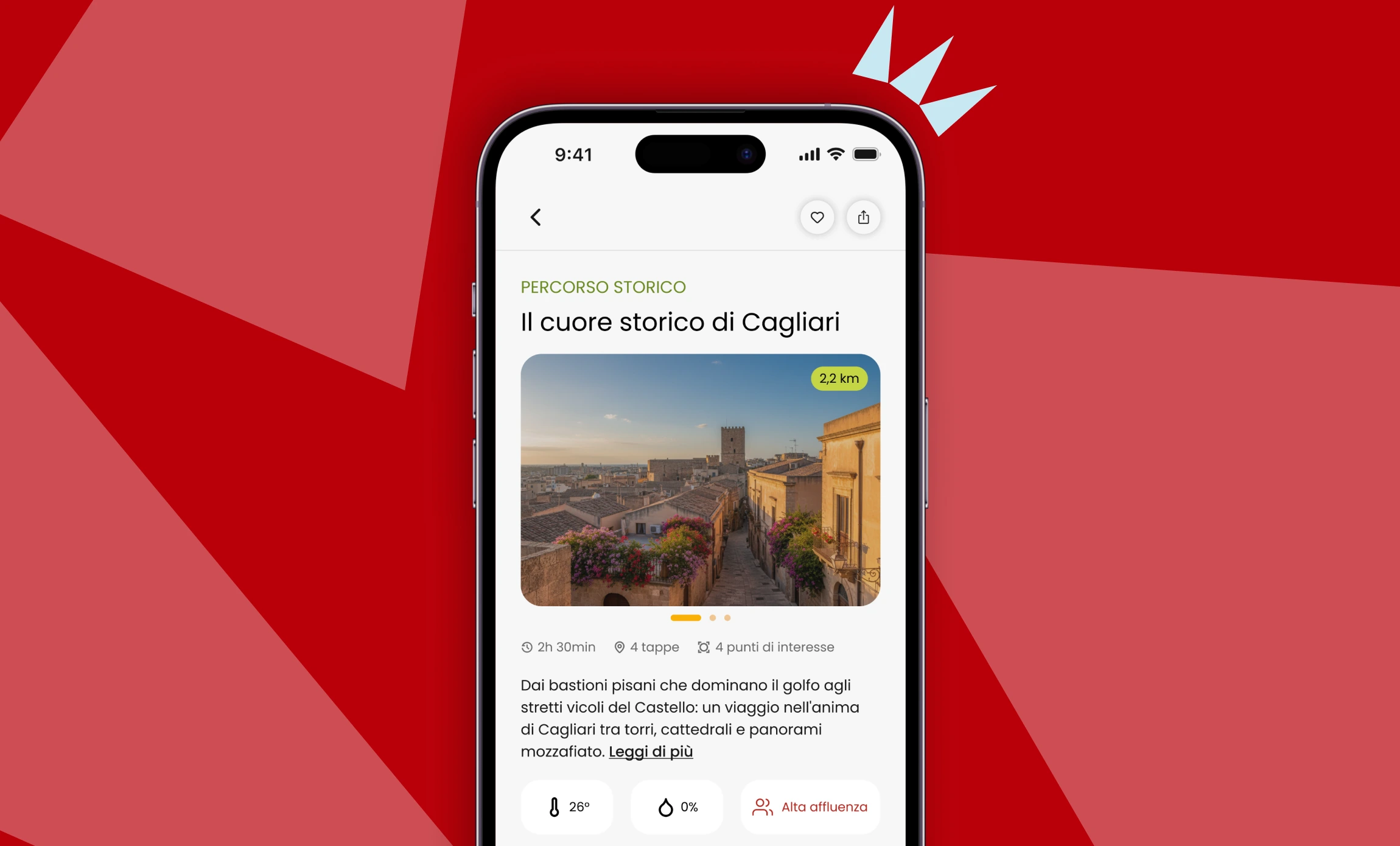
The work continued after the Bootcamp with a high-fidelity
prototype and usability interviews. The resulting feedback
helped the team identify opportunities for further development,
while also establishing a shared process for future design and
validation activities.
My role
I worked as facilitator and UX designer throughout the programme
and the design work that followed.
I structured and facilitated the workshop activities, guided the
company's team through the different stages of the process and
translated the outcomes into a coherent user experience.
After the Bootcamp, I developed the high-fidelity prototype and
supported the team in planning and conducting the first round of
user validation.
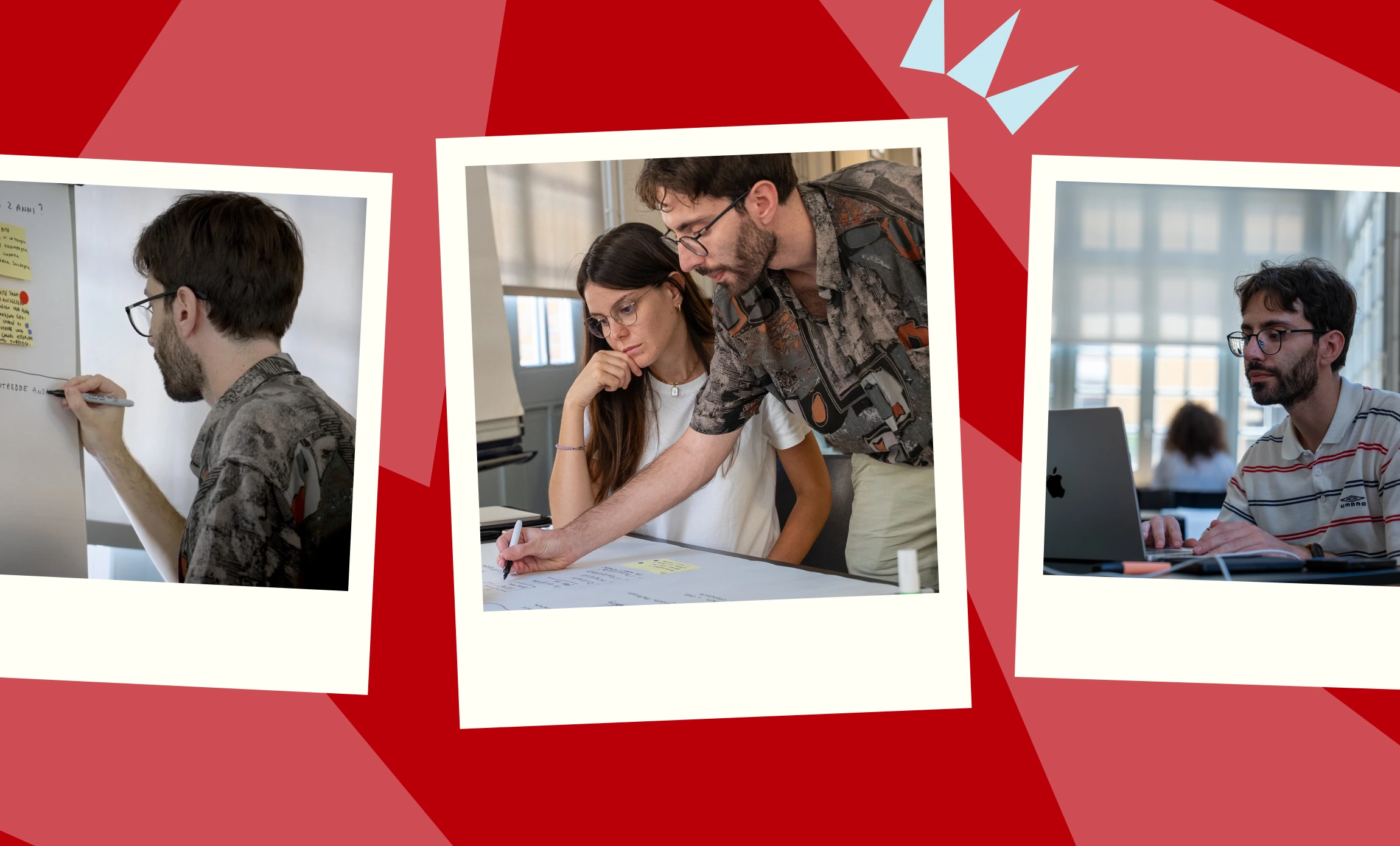
The first stage brought the team together for three days of collaborative workshops, creating space to explore, discuss and define.
Framing the Challenge
We began by building a shared understanding of the product, its
users and the challenges ahead. Through discussion and
collaborative mapping, we explored the existing experience and
identified key moments across discovery, exploration and
engagement.
This helped the team move from broad product ambitions towards
more specific opportunities to address.
Co-design and Ideation
Once framed the challenge, I guided the team through a series of
co-design exercises to explore different possibilities. We
combined benchmarking, individual sketching and group discussion
to generate a range of ideas, then compared and prioritised them
together.
The most relevant ideas were brought together into a shared user
flow and storyboard. Through discussion and iteration, we
refined the main elements of the experience and defined how they
could work together, building alignment around a shared
direction.
Afterwards, I translated the outcomes from sketches into an
initial AI-generated concept, making the proposed direction more
tangible and helping consolidate some of its key structures.
With a shared direction in place, the work continued beyond the workshop.
Prototype & Validation
After the Bootcamp, I translated the direction developed during
the workshops into a high-fidelity interactive prototype. Then,
we prepared a validation plan, identifying different user
profiles and defining an interview guide.
Five usability interviews were conducted to understand how
people approached the proposed experience and identify areas for
further refinement.
I facilitated the first session and supported the team during
the second one, gradually transferring the research process and
helping establish a more independent approach to future
validation activities.
The process turned an initial product challenge into a shared
and testable direction, while giving the team a practical
framework for continuing the design and validation work
independently.