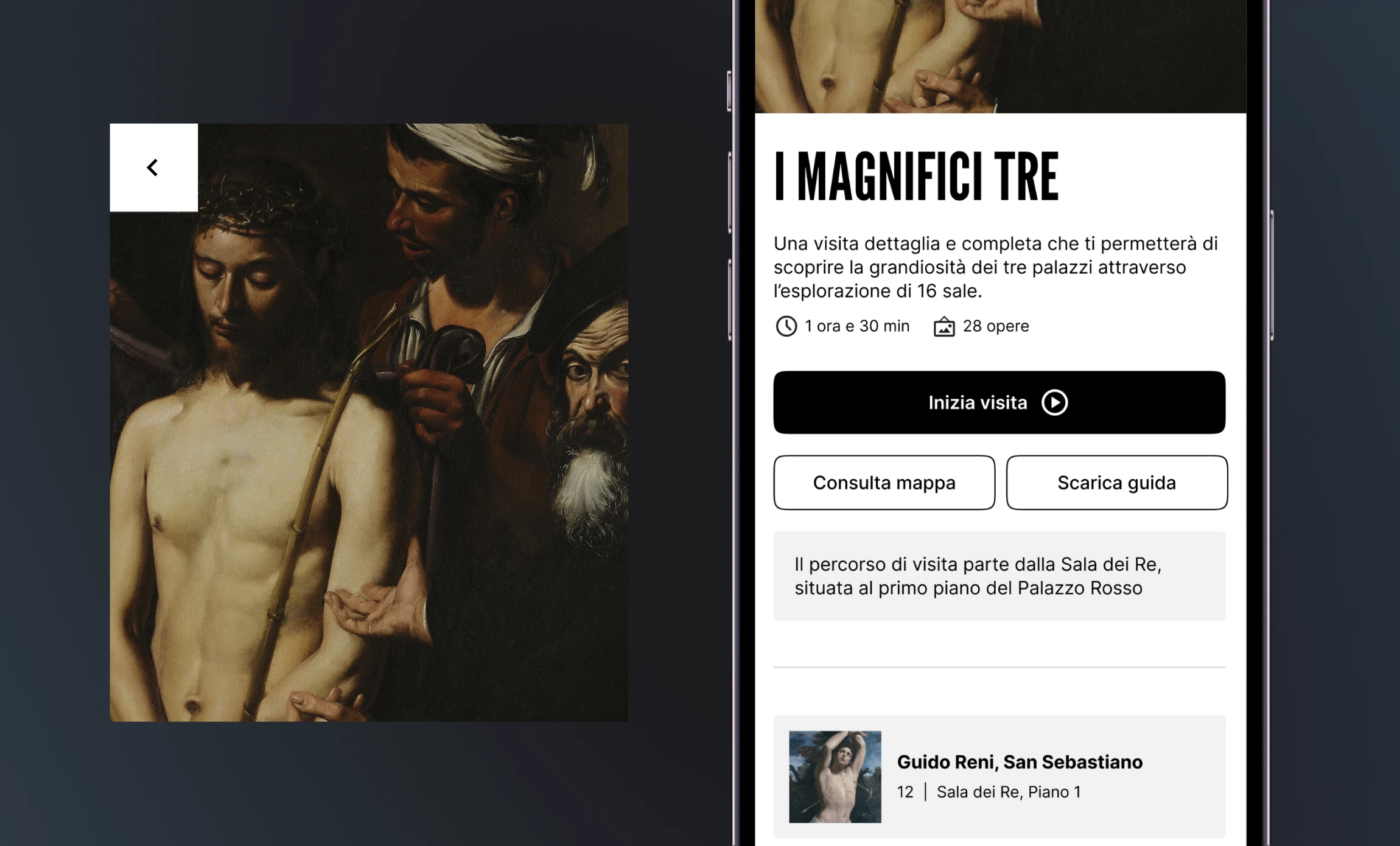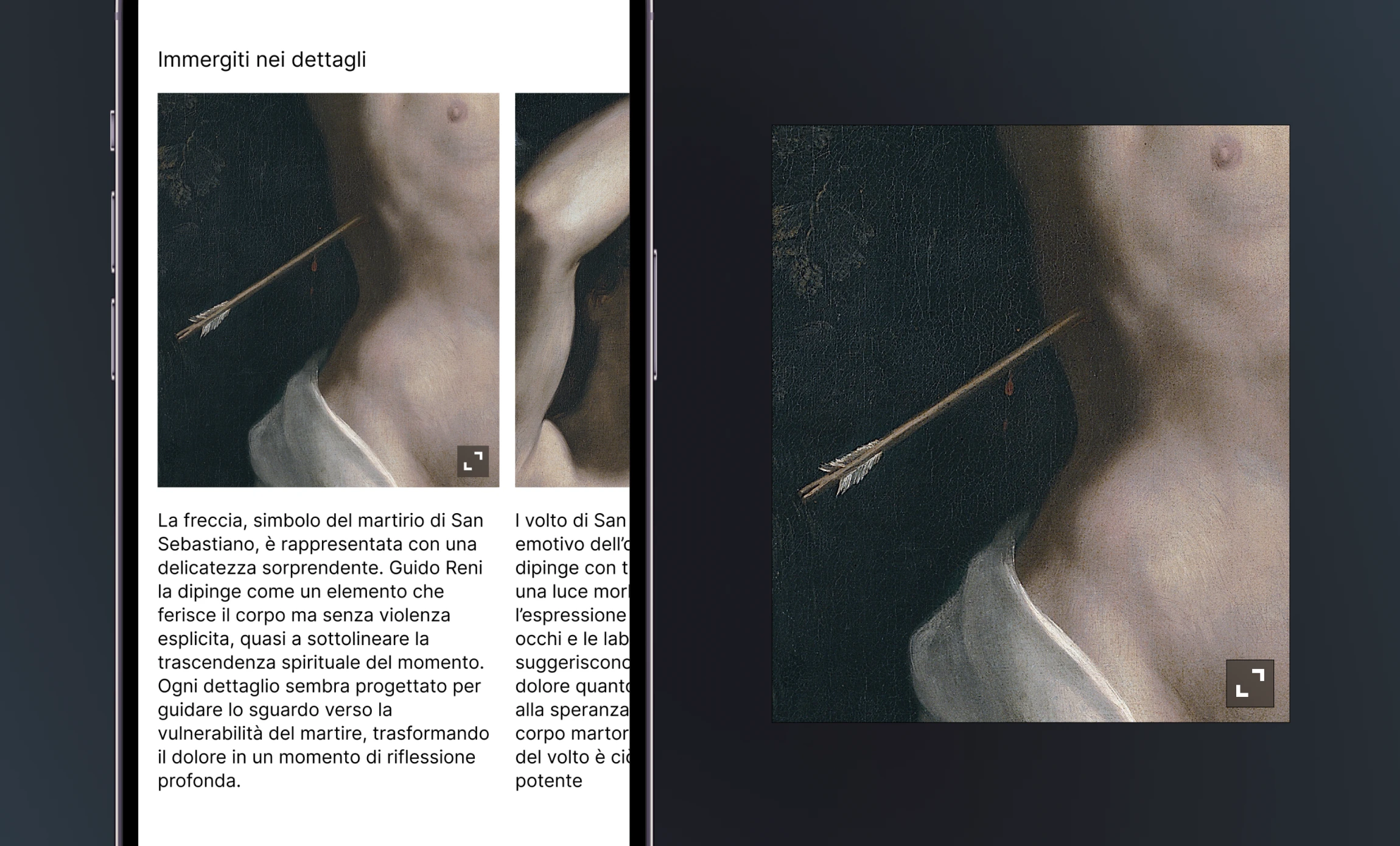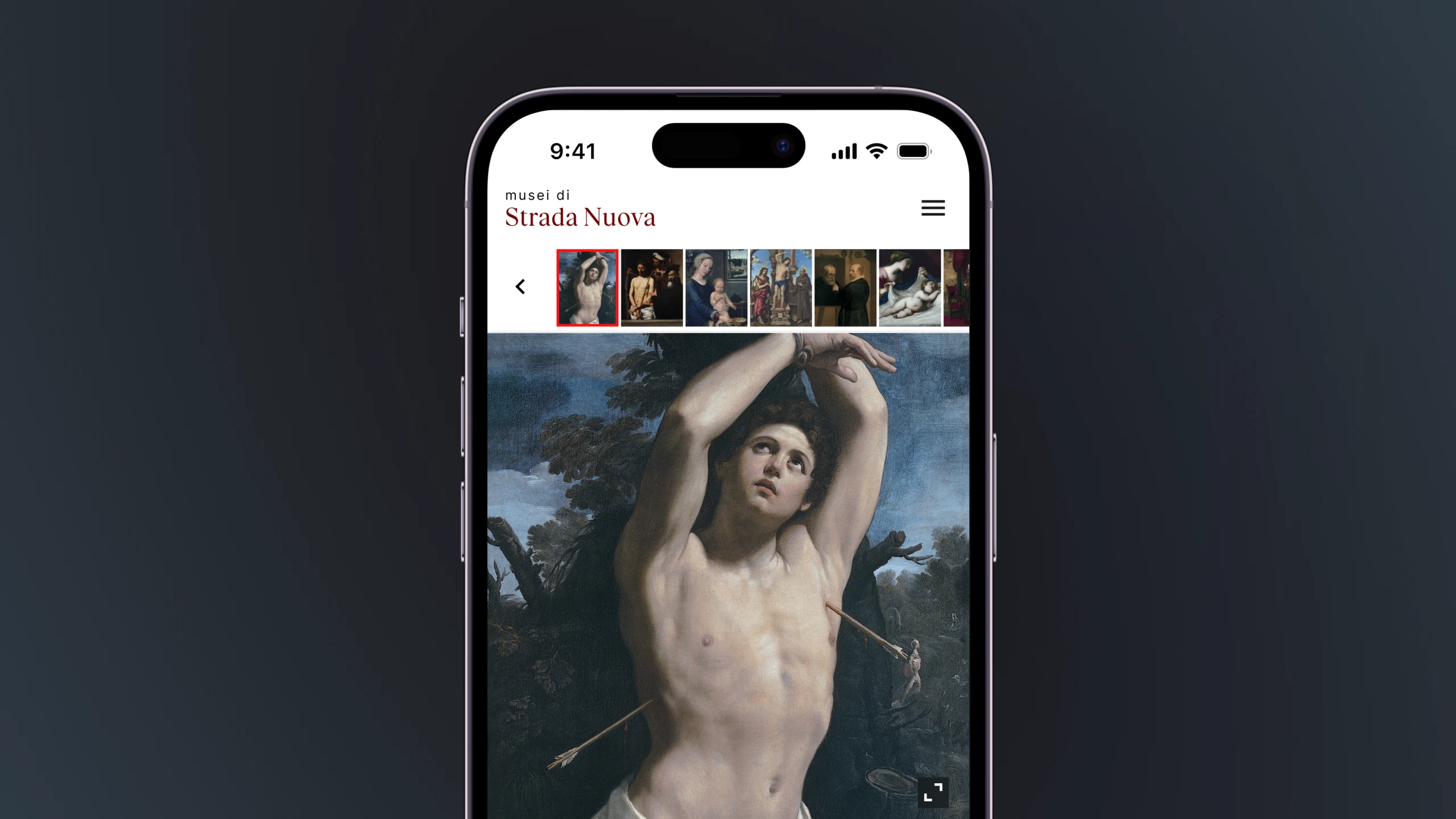
The concept explored how a museum app could adapt the experience to different visitors, creating personalised routes based on their interests, time, and individual needs.
Introduction
The project was developed as a design exploration for the Musei
di Strada Nuova in Genoa, looking at how a digital experience
could support visitors throughout their museum journey.
Rather than offering the same experience to everyone, the
concept imagined an app that could adapt the visit to each
person, taking into account their interests, available time,
context, and accessibility needs.
Project Output
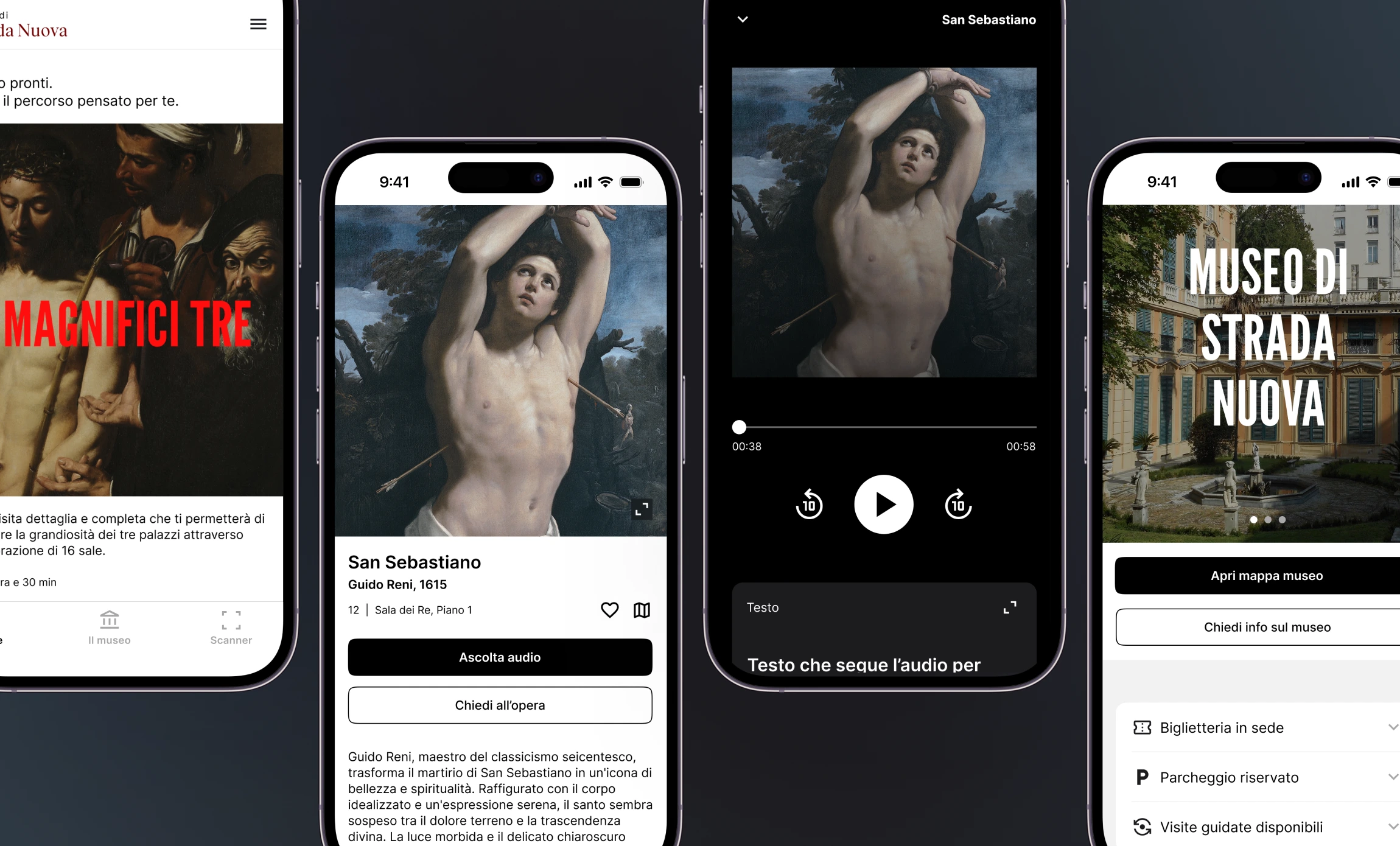
The outcome was a complete mobile app concept, from onboarding
and journey architecture to the final interface.
The project brought together research insights, interaction
patterns, and a modular content structure to create a coherent
digital experience for discovering the museum and its
collections.
My role
As a UX Designer, I worked across the UX process, from research and benchmark analysis to information architecture, user flows, and wireframing. I collaborated with the team on the definition of the visual interface and final UI design.
To design an experience that could adapt to different visitors, we first needed to understand who they were, what brought them to museums, and what could influence the way they experienced a visit.
Understanding the audience
We started by looking at data and reports on museum attendance,
visitor behaviour, and accessibility in Italy.
According to ISTAT’s Culture and Leisure report, museum visitors
are predominantly young and highly educated, with participation
higher in Central and Northern Italy.
Most people visit museums only occasionally and usually share
the experience with a partner, friends, or family. A 2024 YouGov
survey also reported that the main motivations are appreciating
art and learning something new, while some visitors consider
museums as places to relax and reflect.
Accessibility remains a significant challenge.
Research by Fondazione Santagata and IULM highlighted gaps in
physical access, dedicated services, and tools for visitors with
disabilities, as well as limited communication of accessibility
information before the visit.
Identifying the needs of different visitors gave us a starting point. We then looked at existing digital experiences to identify interaction patterns that could help shape the new experience.
Exploring Existing Solutions
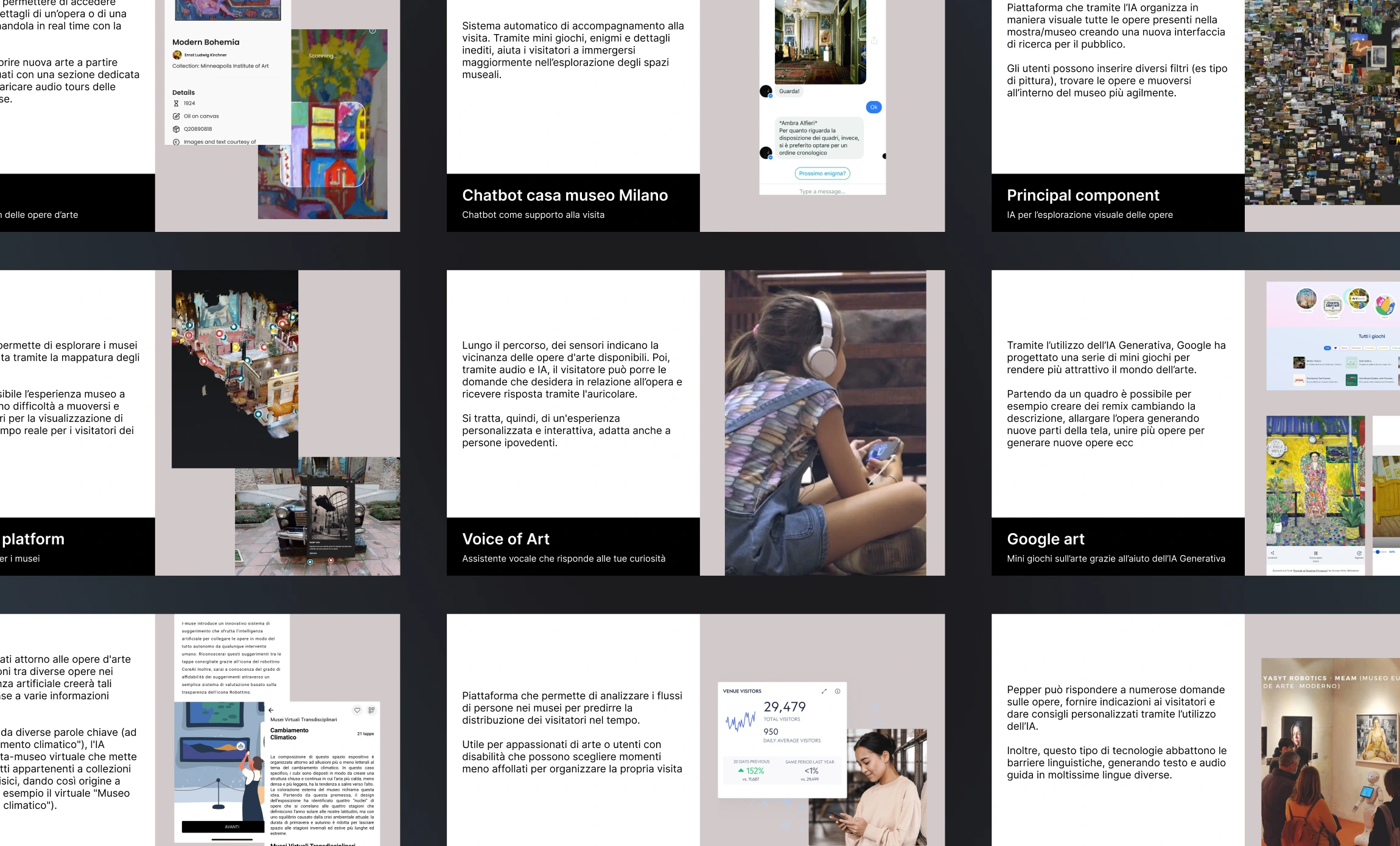
We analysed a range of museum apps and digital services to
identify established interaction patterns that could inform the
experience.
The benchmark focused on features related to personalised
visits, guided navigation, interactive maps, accessibility, and
content discovery.
Looking beyond the museum sector also helped us explore how
similar needs are addressed in other digital experiences and
identify patterns that could be adapted to the concept.
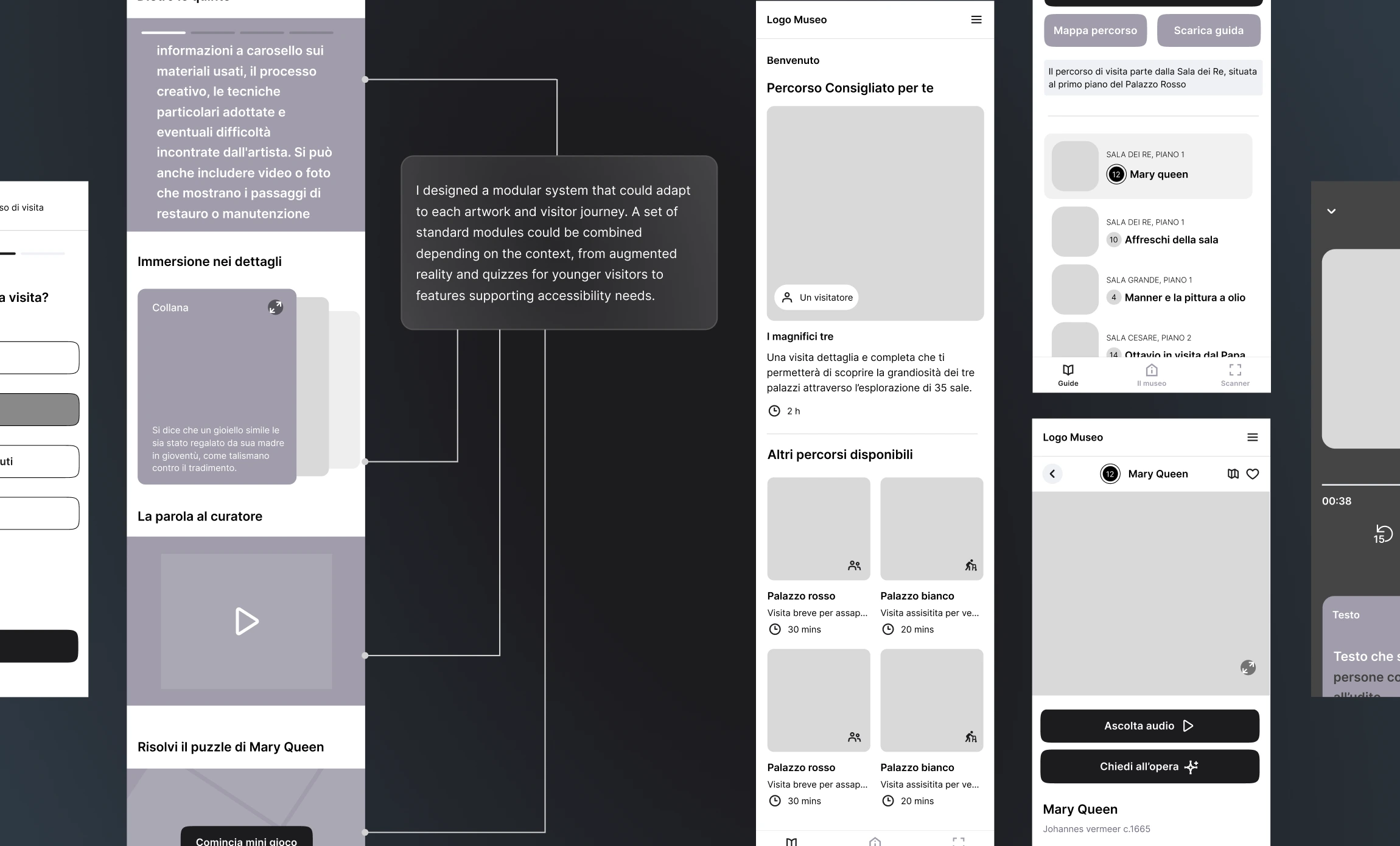
After exploring different solutions, I translated the research insights into the experience structure through information architecture and wireframes, laying the foundation for the visual direction.
Translating Insights into Design
The research directly shaped the structure and features of the
experience. I translated them into the initial information
architecture and wireframes, defining the main journeys and
interactions.
Since museum visits are often shared with family, I explored
ways to make the experience engaging for different age groups,
including activities for younger visitors.
The young and highly educated profile of many visitors suggested
an opportunity to go beyond essential artwork information.
Therefore, I explored additional content and a conversational AI
interaction, allowing visitors to ask questions directly about
an artwork and discover more about the museum and its
exhibitions.
Finally, limited accessibility information led me to address
visitors’ needs before and during their visit. The onboarding
adapts the experience to their requirements (for example by
enabling audio guide transcripts for visitors with hearing
difficulties). A dedicated section also outlines accessibility
facilities across the museum’s three buildings.
Bringing the Experience to Life
The wireframes were translated into a high-fidelity interface
through a clean and minimal visual direction, designed to keep
the artworks at the centre of the experience while making
navigation clear and intuitive.
Alongside the team, I refined the interface down to the smallest
details, creating a consistent visual language across the
different elements and interactions.